Top 5 intercoms for motorcycle helmets: how to choose the right system
How to choose a communication system for your helmet by range, number of riders, audio quality and battery life, from entry-level models to mesh for large groups.
In this article11 sections
- Short answer
- Introduction
- Criteria for choosing a communication system
- Entry-level model: simple and affordable
- Mid-range: improved functionality for small groups
- Advanced system: mesh technology for large groups
- Premium model: top-quality audio and features
- Best all-rounder: balance between price and performance
- Tips for using communication systems
- Conclusion
- Frequently asked questions
Which system suits you depends on how you ride. For riding as a pair, an entry-level model such as the Cardo Spirit with a range of around 500 metres is enough. For small groups there is the mid-range, such as the Cardo Freecom (often 1 to 1.5 km, 4 to 6 riders), and for large groups a mesh system such as the Cardo Packtalk Edge with a range of up to 8 km.
Introduction
What are communication systems for motorcycle helmets?
These systems are compact, Bluetooth-enabled devices that are fitted into your helmet. They let you make hands-free calls, listen to music, receive navigation instructions and even talk to other riders while you ride.
Why are they important?
- Safety: By communicating hands-free, you keep your hands on the handlebars and your eyes on the road.
- Group communication: Stay connected with your fellow riders, which makes group rides safer and more enjoyable.
- Navigation: Receive clear audio instructions without having to look at your phone.
- Entertainment: Enjoy music or podcasts on long rides.
Top 5 communication systems for 2024
For 2024 we have put together the five best systems, which stand out for range, sound quality and ease of use. Whether you are an experienced touring rider or a beginner motorcycle enthusiast, there is a system to suit your needs. In the following sections we take a closer look at each of these top performers, so you can make the best choice for your motorcycle adventures.
Criteria for choosing a communication system
When choosing a communication system for your motorcycle helmet, there are several criteria to look at. These factors determine how well the system suits your riding style and needs.
Range
The range of your communication system is crucial, especially if you often ride in groups. Look for systems that offer a long range, so you stay connected with your fellow riders, even if the group gets a bit spread out.
Number of users
Consider how many riders you usually have in your group. Some systems support only a handful of connections, while others can connect up to 16 riders or more.
Audio quality
Clear sound is essential for safe communication on the road. Look for systems with noise cancellation and wind reduction for the best clarity. You can also choose systems with speakers from renowned brands such as JBL and Harman Kardon for premium sound quality.
Battery life
Nothing is more annoying than a communication system that gives up halfway through your ride. Choose a model with a long battery life that suits your typical ride length.
Extra features
Think about which extras you value. Do you want to be able to stream music, control your phone or receive navigation instructions?
Value for money
Set your budget and look for a system that offers the best features for your money. Bear in mind that a cheap system can work out more expensive in the long run if it does not meet your expectations.
By weighing up these criteria carefully, you will find the perfect communication system to take your riding experience to the next level.
Read more: Everything you need to know about motorcycle licences in the Netherlands
Entry-level model: simple and affordable
If you are looking for a communication system for your motorcycle helmet but do not want to spend too much, an entry-level model may well be the perfect solution. These simple, affordable systems offer the basic features you need for a comfortable ride.
Features of an entry-level model
Entry-level models are generally compact and easy to install. They offer the essential features such as hands-free calling, music streaming and an intercom between rider and passenger. While they may not have all the bells and whistles of more expensive models, they are ideal if you are after the basics.
Advantages: price, battery life, waterproofing
- Price: The biggest plus is of course the attractive price. You get a functional system without breaking the bank.
- Battery life: Many entry-level models excel in battery life, often up to 10 hours or more.
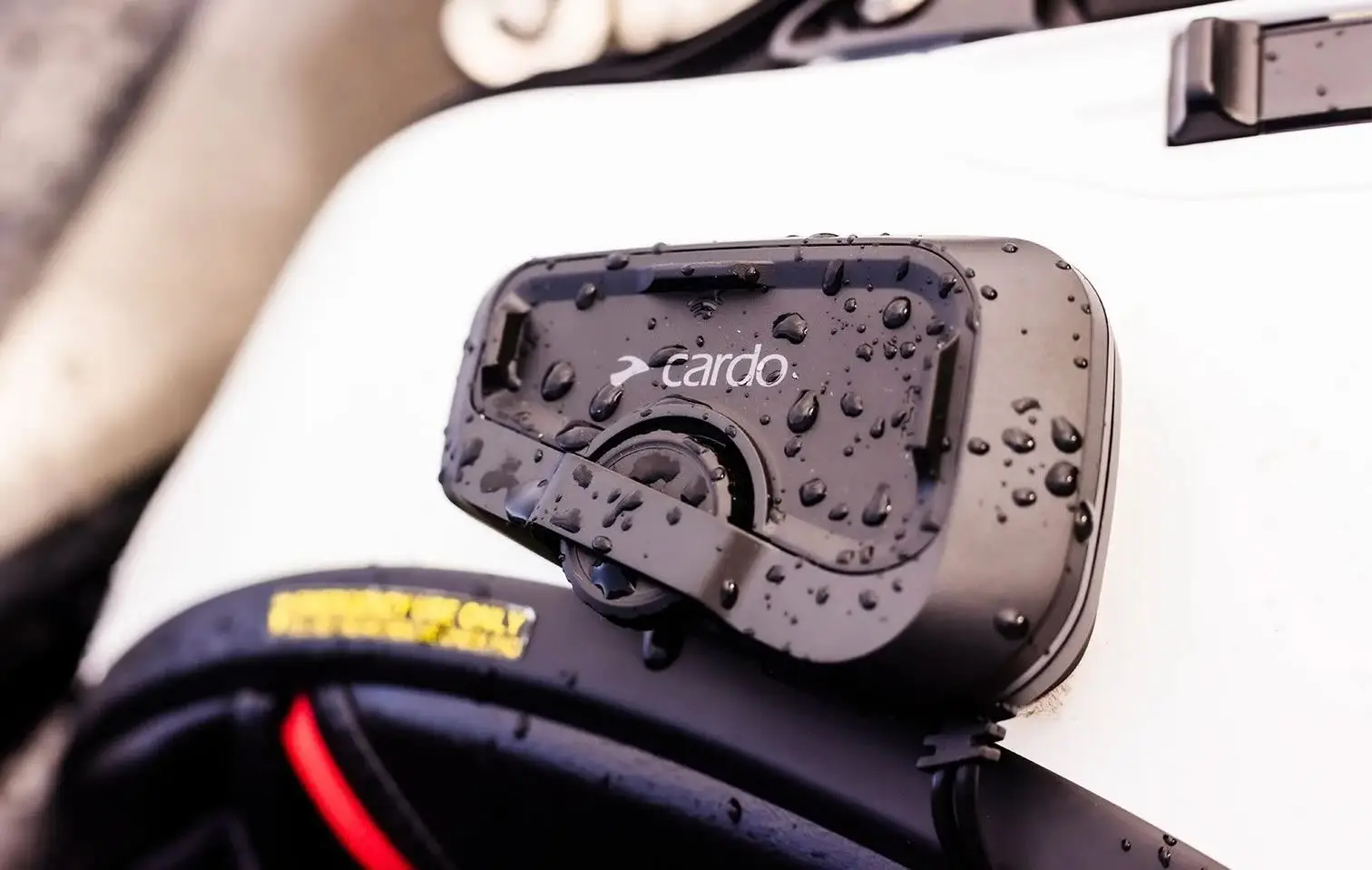
- Waterproofing: Most systems are waterproof, so you can ride without worry in all weather conditions.
Disadvantages: limited range, maximum number of users
- The range is often limited to around 500 metres, which is fine for riding as a pair but less suitable for large groups.
- You can usually only connect with one or two other riders, which can be limiting for group rides.
Suitable for: beginners, solo riders with a passenger
Entry-level models are perfect for new riders who want to get used to using a communication system. Solo riders who occasionally take a passenger will also get a lot of enjoyment from them. It is an excellent way to find out whether a communication system is for you, without immediately spending a fortune.
A good example of an entry-level model is the Cardo Spirit, which offers excellent basic functionality at a sharp price.
If you are looking for a reliable entry-level model, Vespucci offers a selection of affordable options from renowned brands. Their expert advice can help you find the perfect system for your riding style and budget.
Mid-range: improved functionality for small groups
Mid-range communication systems offer an attractive balance between functionality and price for riders who want more than a basic model. These systems are ideal for small groups who ride together and value improved performance.
Features of a mid-range system
Mid-range communication systems stand out through:
- Greater range, often up to 1-1.5 km
- Improved sound quality with advanced noise cancellation
- The ability to communicate with 4-6 riders at the same time
- More extensive features such as voice control and FM radio
Advantages: greater range, better sound quality
The greater range means you stay in contact with your fellow riders for longer, even if the group gets a bit spread out. The improved sound quality makes communication clearer and more pleasant, even at higher speeds.
Disadvantages: higher price, still a limited number of users
Although more expensive than entry-level models, mid-range systems offer more for your money. The number of users is larger, but still limited for very large groups.
Suitable for: small groups of riders
These systems are perfect for friends who regularly tour together or for motorcycle clubs with smaller rides. They offer the right mix of functionality and affordability for keen riders who want to take their communication to the next level.
A good example of a mid-range system is the Cardo Freecom, which offers excellent range, improved sound quality and the ability to communicate with several riders at the same time.
Read more: The ultimate guide to buying a motorcycle: new vs. used
Advanced system: mesh technology for large groups
Mesh technology has turned the world of motorcycle communication on its head. These advanced systems offer unprecedented connectivity for large groups of riders, taking the riding experience to the next level.
Mesh networking explained
Mesh networks work like a web of connections. Instead of a central hub, each device communicates directly with other devices in the network. This creates a robust and flexible communication structure that adapts automatically as riders move in and out of range.
Advantages: long range, many users, multitasking features
- Extended range: Mesh systems can have a range of up to 8 km, depending on the terrain.
- Large groups: Some systems support up to 32 riders at the same time.
- Smart multitasking: Listen to music or navigation while you talk to your group.
Disadvantages: shorter battery life in Mesh mode
The biggest drawback of Mesh technology is the higher power consumption. In Mesh mode, battery life can be considerably shorter than with traditional Bluetooth connections.
Suitable for: large groups and long rides
Mesh systems are ideal for motorcycle clubs, touring groups and long rides where reliable communication is essential. They offer an unrivalled connection for riders who like to head out in large groups and do not want to compromise on range and ease of use.
An excellent example of a Mesh system is the Cardo Packtalk Edge, one of the leading systems on the market. The Packtalk uses Dynamic Mesh Communication (DMC) technology, which makes it possible to connect up to 15 riders in a network, with a range of up to 8 km. The system offers not only excellent sound quality, but also the ability to switch effortlessly from one conversation to another, even if you go out of range of the group. Perfect for long rides and larger motorcycle clubs who want to communicate at their best without interruptions.
Premium model: top-quality audio and features
Premium communication systems for motorcycle helmets are the crème de la crème of the market. These high-end devices offer an unrivalled experience for demanding riders who do not want to compromise on quality and functionality.
Features of a premium communication system
Premium models stand out through:
- Exceptional sound quality with advanced DSP technology
- Long range, often up to 2 km or more
- Extensive connectivity with smartphones and navigation systems
- Advanced voice control and noise-cancelling
- Durable construction with premium materials
Advantages: superior sound quality, advanced features
The crystal-clear audio makes communication effortless, even at high speeds. Advanced features such as automatic volume control and seamless integration with your smartphone take your riding experience to the next level.
Disadvantages: high price
The biggest drawback is undoubtedly the price. Premium systems can cost a pretty penny, which makes them less accessible to the average rider.
Suitable for: demanding riders who want the best
These systems are ideal for keen touring riders, professional riders or technology enthusiasts who value top quality and are willing to pay for it. They offer the ultimate combination of performance, durability and innovation for those who settle for nothing less than the very best.
An excellent example of a premium communication system is the Cardo Packtalk Pro. This system offers top sound quality, thanks to DMC (Dynamic Mesh Communication) technology, which lets riders connect with up to 15 riders, with a range of up to 2 km. In addition, Advanced Noise Cancellation ensures clear communication, even at high speeds and in loud ambient noise. The system is easy to operate via voice control and offers excellent integration with smartphones, navigation systems and music. The Cardo Packtalk Pro is the ultimate choice for riders who do not want to compromise on performance and technology.
Read more: 10 essential safety features for your new motorcycle helmet
Best all-rounder: balance between price and performance
If you are looking for a communication system that offers a perfect balance between price and performance, an all-rounder is the ideal choice. These systems combine the best qualities of entry-level and premium models, which makes them suitable for most riders.
Features of the best all-round communication system
A good all-rounder has:
- A range of 1-2 km
- The ability to connect with 4-6 riders
- Clear sound quality with noise cancellation
- Battery life of 8-12 hours
- Waterproof housing
- Intuitive controls
Advantages: good balance between features, sound quality and price
These systems offer excellent value for money. You get advanced features such as voice control and FM radio, without the premium price tag. The sound quality is noticeably better than with entry-level models, which makes for a more pleasant riding experience.
Disadvantages: possibly not the very best in every area
Although all-rounders excel in versatility, they will not be the very best in specific areas. The range, for example, is lower than with Mesh systems, and the sound quality may be just below that of premium models.
Suitable for: most riders
Whether you are a weekend rider or regularly go on long tours, an all-rounder suits almost every rider. It is the ideal choice if you want more than a basic model, but do not need the most advanced features of premium systems.
For advice on which all-round communication system best suits your riding style, you can turn to specialist motorcycle shops. They can help you find the perfect balance between functionality and budget.
Tips for using communication systems
Now that you know which communication system suits you best, it is time to look at how to use it in practice. Here are a few handy tips to get the most out of your new gadget.
How do you install a communication system?
The installation of your communication system is crucial for optimal performance:
- Read the manual carefully.
- Choose the right place in your helmet for the speakers and microphone.
- Use the supplied mounting materials for a secure fit.
- Test the system before you hit the road.
Maintenance and care of your headset
To keep your communication system in top condition:
- Clean it regularly with a slightly damp cloth.
- Keep the charging port free of dirt and dust.
- Store the system in a dry place when you are not using it.
- Check regularly for software updates for the best performance.
Safe use while riding
Safety comes first, also when using your communication system:
- Set up your system before you set off.
- Use voice control wherever possible.
- Keep your eyes on the road and your hands on the handlebars.
- Adjust the volume to the riding conditions.
By following these tips, you ensure a safe and enjoyable riding experience with your new communication system. Enjoy the improved connectivity and always stay alert on the road!
Read more: 10 essential safety features for your new motorcycle helmet
Conclusion
Now that we have covered all aspects of communication systems for motorcycle helmets, it is time to take stock. Here are the key points to remember when choosing your ideal system:
- Entry-level models are perfect for beginners and solo riders on a limited budget.
- Mid-range systems offer a good balance between price and functionality for small groups.
- Mesh technology is ideal for large groups and long rides with extensive connectivity.
- Premium models deliver top-quality audio and advanced features for demanding riders.
- All-rounders offer the best value for money for most riders.
When choosing, take your riding style, group size and budget into account. A good communication system not only improves your riding experience, but also contributes to your safety on the road.
By making the right choice and using your system sensibly, you can safely enjoy improved communication on your rides. If you are still unsure which system suits you best, do not hesitate to seek advice from specialist motorcycle shops such as Vespucci, where you will get expert advice on the latest communication technology for riders.
Frequently asked questions
Are communication systems waterproof?
Most modern systems are waterproof, or at least water-resistant, and suitable for use in a variety of weather conditions.
How long does the battery of a communication system last?
Battery life ranges from 8 to 20 hours, depending on the model and how intensively you use it.
Can I use my communication system with different helmet brands?
Yes, most systems are universal and fit different helmet types and brands.
Is it legal to use a communication system while riding a motorcycle?
In the Netherlands, using communication systems while riding is permitted, provided they are operated hands-free.
Can I listen to music and talk to other riders at the same time?
Many modern systems support multitasking, so you can listen to music and talk to other riders at the same time.
How far does the range of a communication system reach?
The range varies from 500 metres on entry-level models to 8 km on advanced Mesh systems, depending on the terrain and conditions.
Are there communication systems that support voice control?
Yes, many mid-range and premium models offer voice control for hands-free operation.
Was this article helpful?