Repairing Vespa damage: 5things you need to know
What to do after damage to your Vespa: the first steps, the assessment, the role of your insurance and when a Vespa is an economic total loss.
In this article10 sections
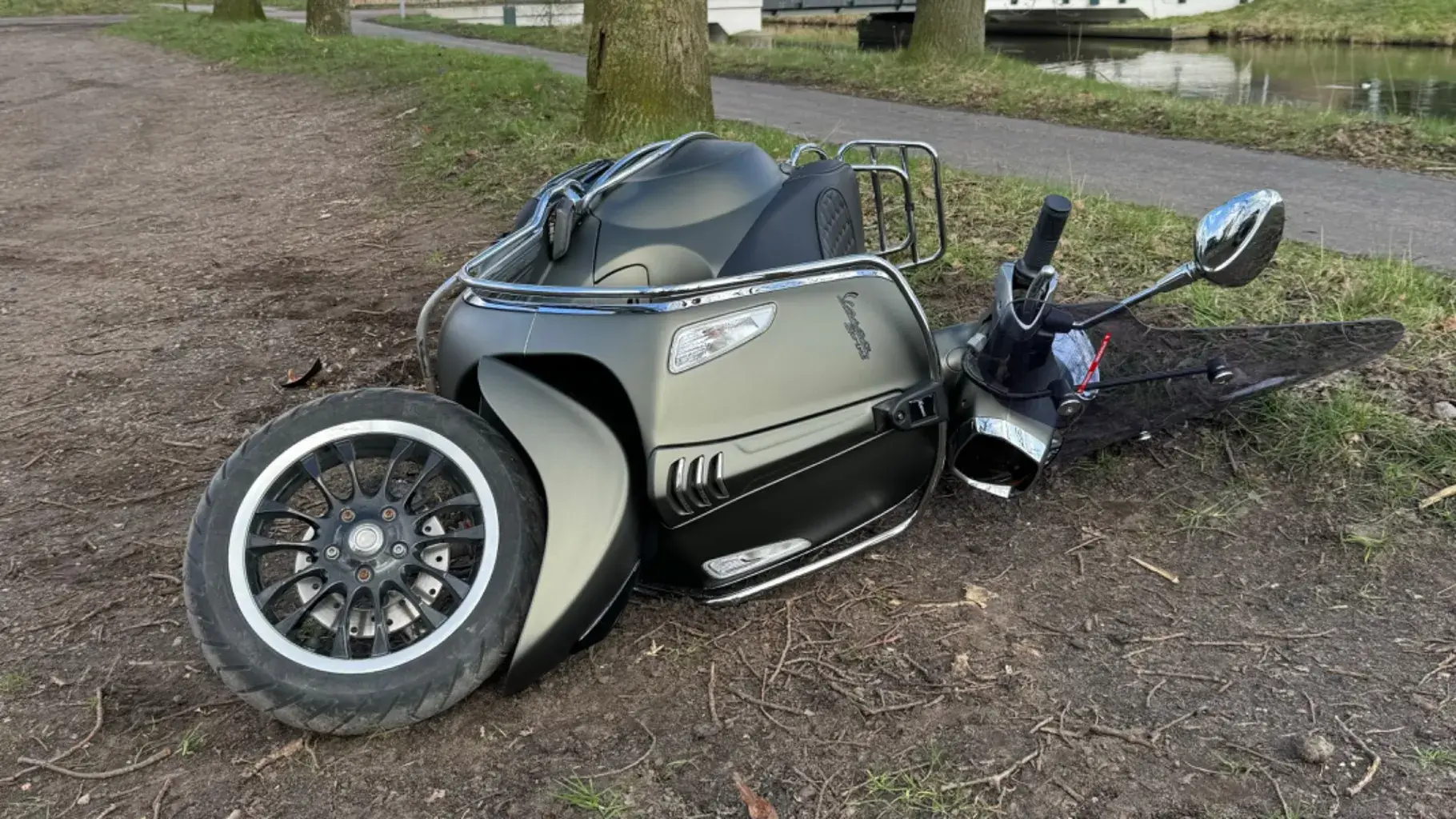
First make your Vespa safe, then send photos of the damage for a provisional assessment. For insurance damage, you contact your insurer yourself, and above €750 to €1000 a damage assessor often comes to take a look. If the damage is more than 50% of the current market value, a bidding process starts to determine whether repair or total loss is the cheaper option.
Scooter damage: What to do if your scooter is damaged?
The first steps after scooter damage
When you discover scooter damage, it is crucial to stay calm and work systematically. Start by making the situation safe: move your scooter to a safe spot and check that there are no immediate hazards, such as leaking fuel.
The importance of the right approach
The right approach to scooter damage can save you a lot of time, money and frustration. It not only helps you get the damage repaired efficiently, but also helps any insurance claims run smoothly. It also contributes to your own safety and that of other road users.
Why choose Vespucci?
At Vespucci, we understand how important your Vespa is to you. That is why we offer:
- Nationwide collection service: We collect Vespas throughout the Netherlands.
- Free damage assessment: Within 24 hours you receive a detailed report.
- Thorough inspection: During the repair, we inspect the frame, brakes, tyres, shock absorbers, lighting and steering mechanism.
- Professional paintwork: For a perfectly finished result.
- Free valuation: After the repair, we determine the current value of your Vespa.
- Skilled mechanics: Our team consists of professionals with many years of experience.
- Oil change and test ride: After repair, every Vespa is tested and adjusted to ensure optimal performance.
With this approach, we repair 9 out of 10 damaged Vespas. A Vespa is only declared a total loss in exceptional cases.
The Vespa repair process at Vespucci
An accident or damage to your Vespa can be annoying, but at Vespucci we make sure the damage is handled professionally and without worry. With our efficient, customer-focused approach, we restore your Vespa to top condition. In this overview, we take you through our process step by step, from the first contact to the delivery of your repaired scooter.
- Riding in damaged and getting in touch: Contact Vespucci. You can bring your Vespa in yourself or use our collection service.
- Sending photos for a provisional assessment: Send photos of the damage via WhatsApp. Within 24 hours you receive a provisional assessment.
- Damage assessment and report: Our skilled mechanics carry out a detailed assessment and draw up a report. All repair costs are clearly stated in it.
- Consultation and insurance: For insurance damage, you contact your insurer yourself. A damage assessor is often called in for damage above €750-€1000. The assessor comes to Vespucci to assess the damage on site.
- Repair work: Once you agree, we repair the Vespa according to the report drawn up beforehand:
- Repair and replacement of damaged parts
- Professional paintwork
- Inspection of all important systems
- Test ride and finishing: After repair, the Vespa goes on a thorough test ride. We check that everything works smoothly and do an oil change for optimal performance.
- Delivery: We arrange a delivery appointment and bring the repaired Vespa back to you.
At Vespucci, quality and service come first. With our skilled mechanics, transparent communication and thorough care, we make sure your Vespa can hit the road again like new. Whether it is minor damage or something more serious, we guide you throughout the whole process and make sure you can keep riding with confidence and enjoyment.
Damage repair with insurance
If your scooter is damaged, it can be a relief to know that your insurance may be able to help with the repair. Let's look at the different aspects of damage repair with insurance.
Types of scooter insurance
There are three main types of scooter insurance:
- Third-party liability (WA): Only covers damage you cause to others.
- Third-party, fire and theft (Beperkt Casco): Covers third-party liability plus certain damage to your own scooter, such as theft or fire damage.
- Comprehensive (Allrisk): The most extensive cover, including damage to your own scooter if it is your own fault.
The damage repair process with insurance
When you want to arrange damage repair through your insurance, you usually follow these steps:
- Advice call: Contact your insurer for advice about your cover and the claims process.
- Drawing up a damage report: Make a detailed record of the damage, including photos.
- Communication with the damage assessor: An assessor evaluates the damage and draws up a report.
- Repair process: Once approved, you can have the scooter repaired by an approved repairer.
Benefits of professional damage repair
Professional damage repair through your insurance has several important benefits:
- Warranty on repairs
- Use of original parts
- Preserving the value of your scooter
By having the damage repair handled through your insurance, you make sure your scooter is repaired safely and expertly, so you can get back on the road without worry.
The bidding process for major Vespa damage
When the damage amounts to more than 50% of the current market value, the damage assessor can start a bidding process. The aim of this process is to find out how much the Vespa is worth in its current damaged state. This amount is also known as the salvage value.
Example calculation:
- Current market value of Vespa: €5,000
- Repair costs: €2,800
- Percentage of damage: €2,800 ÷ €5,000 = 56%
Because the damage is more than 50% of the value, the assessor starts the bidding process. The Vespa is then offered to buyers who specialise in damaged vehicles.
Determining whether Vespa damage repair is economically viable
After the bidding process, the highest bid is considered:
- Bid lower than €2,199: The Vespa is economically repairable, because repair is cheaper than the loss the owner would suffer by accepting the salvage value.
- Bid higher than €2,199: The Vespa is declared an economic total loss, because it is financially more advantageous to write the Vespa off and accept the salvage value.
What happens if a Vespa is an economic total loss?
If the Vespa is declared a total loss:
- Compensation: The owner receives compensation equal to the current market value of the vehicle minus the salvage value.
- Transfer of ownership: The Vespa becomes the property of the party that made the highest bid.
- Own repair option: The owner can possibly decide to keep the Vespa after all and have it repaired, but this is usually not cost-effective.
What is an economic total loss?
For a Vespa with a current market value of, for example, €5,000, economic total loss means that the repair costs are higher than this value. This can happen with serious damage, such as:
- Major deformation of the frame
- High costs for paintwork and replacing parts
- Damage to the engine or electronics
Example: Economic total loss
Say you have a Vespa with a current market value of €5,000. After an accident, the repair costs are estimated at €6,000. In this case, the Vespa is declared an economic total loss.
What now?
- Insurance payout: The insurer usually pays out the current market value (€5,000), minus the salvage value of the Vespa.
- Salvage value: The damaged Vespa could be worth, for example, €1,000 for parts or a sale to a buyer.
- Repairing at your own expense: If the Vespa has sentimental value, you can choose to pay for the repair yourself. Be prepared for high costs.
- Buying a new Vespa: Use the payout to buy a new or second-hand Vespa.
At Vespucci, we are happy to advise you on the best choice, whether you opt for repair, selling, or buying a new Vespa.
Selling a scooter after damage
Selling your scooter after damage can sometimes be the best option. Let's look at the reasons and the process behind it.
Reasons to sell a damaged scooter
There are several situations in which selling your damaged scooter can be sensible:
- The repair costs are higher than the value of the scooter
- You want to upgrade to a newer model
- You do not have the time or inclination to tackle the repair
The process of selling a scooter after damage
Damage report and valuation
Start with a thorough damage report. Have an independent assessor evaluate the damage and determine the salvage value. This gives you a realistic idea of what your scooter is still worth.
Options for selling
You can choose between a private sale or selling to a professional buyer:
- Private: Potentially a higher return, but more time and effort
- Professional buyer: Quicker and easier, but often a lower payment
Payment and completion
Make sure you have a clear agreement and a correct transfer of ownership. Be open about the damage to avoid problems afterwards.
Things to consider when deciding to sell
Before you decide to sell, consider:
- The sentimental value of your scooter
- The cost of a new scooter versus repair
- Your current financial situation
By carefully weighing up all aspects, you can make a well-considered decision about whether or not to sell your damaged scooter.
Preventing scooter damage
Prevention is better than cure, and that certainly applies to scooter damage. By being proactive, you can avoid many problems and keep your scooter in top condition. Here are some essential tips to prevent scooter damage:
Regular maintenance and inspections
Keep your scooter in top shape by carrying out regular checks. Look at:
- Tyre pressure and tread
- Brakes and brake fluid
- Oil level and quality
- Lights and indicators
By checking these points regularly, you not only prevent damage but also improve your safety on the road.
Safe riding and defensive riding
Anticipate the traffic and keep enough distance. Adjust your speed to the conditions and be extra alert in busy areas or in bad weather.
Using protective accessories
Invest in quality accessories that protect your scooter:
- A sturdy crash bar
- Handguards to prevent scratches in a fall
- A protective cover for when it is parked up
Safe parking and anti-theft measures
Park your scooter in a safe place, preferably under cover. Use a good lock and consider an alarm system. This protects not only against theft, but also against vandalism and the weather.
By taking these preventive measures, you significantly reduce the chance of scooter damage. That way you keep your two-wheeler in top condition for longer and save on repair costs in the long run.
Financial aspects of scooter damage
When it comes to scooter damage, the financial aspects are an important part to bear in mind. Let's look at the different costs and considerations involved.
Impact on insurance premiums
A damage claim can affect your insurance premium. The premium often goes up after a claim, but the exact impact depends on your insurer and your no-claims years.
Excess
Many insurance policies have an excess. You pay this amount, often between €100 and €500, yourself when you make a claim. Consider whether claiming for minor damage is worthwhile.
Financing major repairs
For costly repairs, there are several options:
- Payment in instalments at some scooter shops
- Personal loan
- Using savings
Always weigh the costs against the value of your scooter. Sometimes investing in a new scooter is more cost-effective in the long run.
Conclusion
Now that we have covered all aspects of scooter damage, it is time to summarise the key points and finish with some frequently asked questions.
Summary of the key points
- Act quickly and appropriately when your scooter is damaged to prevent further problems
- Get good scooter insurance that suits your situation and riding style
- Invest in preventive measures to avoid future damage
- Take the financial aspects of damage repair and insurance claims into account
It is crucial to act quickly and correctly when your scooter is damaged. This is not only good for your own safety, but also for that of other road users. It can also save you a lot of money in the long run.
We encourage you to be properly insured and to maintain your scooter regularly. After all, prevention is the best way to avoid scooter damage. With the right knowledge and precautions, you can enjoy your scooter without worry for years to come.
Frequently asked questions
Do I have to report every bit of scooter damage to my insurer?
It's sensible to always report significant damage, but you don't always need to for minor scratches. Consider the impact on your premium and excess.
Can I keep riding a damaged scooter?
With cosmetic damage you often can, but with mechanical or structural damage we advise against it because of the safety risks.
What is the difference between original and aftermarket parts?
Original parts are made by the scooter manufacturer itself, while aftermarket parts are made by third parties. Original parts often fit better but are more expensive.
How often should I have my scooter checked to prevent damage?
We recommend a major service once a year and a quick check every 3-4 months to keep your scooter in top condition.
What should I do if my scooter has been written off as a total loss?
Talk to your insurer about the payout and consider whether repairing it is still worthwhile. Sometimes selling it or trading it in is a better option.
Was this article helpful?