The ultimate guide to buying a motorcycle: new vs. used
Which types of motorcycle there are, what a new or used bike gets you, and what to look out for with test rides, costs and dealers.
In this article11 sections
A new motorcycle gives you a manufacturer's warranty, the latest technology and safety features such as ABS, plus reliability for daily commuting. A used motorcycle often gives you more bike for your money, the biggest drop in value has already happened and there is more choice. That makes it a good fit as a first bike or for weekend rides. Let your budget, riding experience and intended use decide.
The importance of a well-considered choice
Buying a motorcycle is not a decision to take lightly. It is not just about choosing a brand or model that appeals to you. There is a lot more to it:
- Safety comes first: the right motorcycle for your experience and riding style
- Financial considerations: purchase, maintenance and insurance
- Practical aspects: what are you going to use the motorcycle for?
- Personal preferences: comfort, design and performance
Making the right choice can be the difference between years of riding enjoyment and disappointment. That is why it is essential to do your research before you take the plunge. In the following sections we take a closer look at everything involved in buying your ideal motorcycle.
Types of motorcycle
If you are looking for a motorcycle, it is important to know which types there are. Each category has its own characteristics and advantages, suited to different riding styles and preferences.
Overview of motorcycle categories
- Touring motorcycles: Perfect for long distances and comfort. They offer an upright seating position, good wind protection and plenty of luggage space.
- Sports motorcycles: Designed for speed and performance. These motorcycles have a forward-leaning seating position and are ideal for track days or fast rides.
- Naked bikes: Versatile motorcycles without fairings, suitable for everyday use and short rides. They offer a good balance between comfort and sportiness.
- Cruisers: Characterised by their low seating position and relaxed riding style. Perfect for leisurely tours and fans of classic design.
- Adventure/Allroad motorcycles: Suitable for both tarmac and unpaved roads. Ideal for adventurers who like to go off-road.
Choosing the right category
When choosing a type of motorcycle, consider your riding experience, intended use and personal preferences. Beginners can benefit from a naked bike because of its versatility, while experienced riders may prefer a sports or adventure motorcycle.
Also think about your daily routes and whether you want to ride long distances. A touring motorcycle can be more comfortable for commuting, while a cruiser is perfect for relaxed weekend rides.
Whatever you choose, make sure you have the right protection. A quality helmet is essential for every rider. Brands such as Roof and Scorpion, available from specialists like Vespucci, offer helmets to suit different motorcycle styles and safety requirements.
Read more: 7 Essential Tips for Buying Your First Motorcycle
New vs. used motorcycles
Choosing between a new or used motorcycle is an important decision that every motorcycle enthusiast has to make. Both options have their own pros and cons, so let's look at the main considerations.
Advantages of a new motorcycle
A brand-new motorcycle has clear advantages. First, you get a manufacturer's warranty, which gives you peace of mind and potential cost savings if unexpected problems arise. You are also assured of the latest technologies and safety features, such as advanced braking systems and improved stability control.
Advantages of a used motorcycle
On the other hand, a second-hand motorcycle can be a smart choice for your wallet. You often get more bike for your money, and the biggest drop in value has already happened. There is also a larger selection available, so you may find that one special model you have been looking for for years.
Factors to consider
When making your choice, take into account your budget, riding experience and intended use. A new motorcycle can be ideal for daily commuting because of its reliability, while a used motorcycle can be perfect for weekend rides or as your first bike.
Whatever you choose, always invest in good protection. A high-quality helmet is essential for every rider, whether you ride a new or used motorcycle. Make sure your helmet meets the latest safety standards and is comfortable on long rides.
The buying process
Buying a motorcycle is an exciting adventure, but it does require thorough preparation. Let's look at the main steps in the buying process.
Doing your research and preparing
Start your search online. Read reviews, compare specifications and dive into motorcycle forums to read other riders' experiences. Make a shortlist of motorcycles that appeal to you and fit your budget.
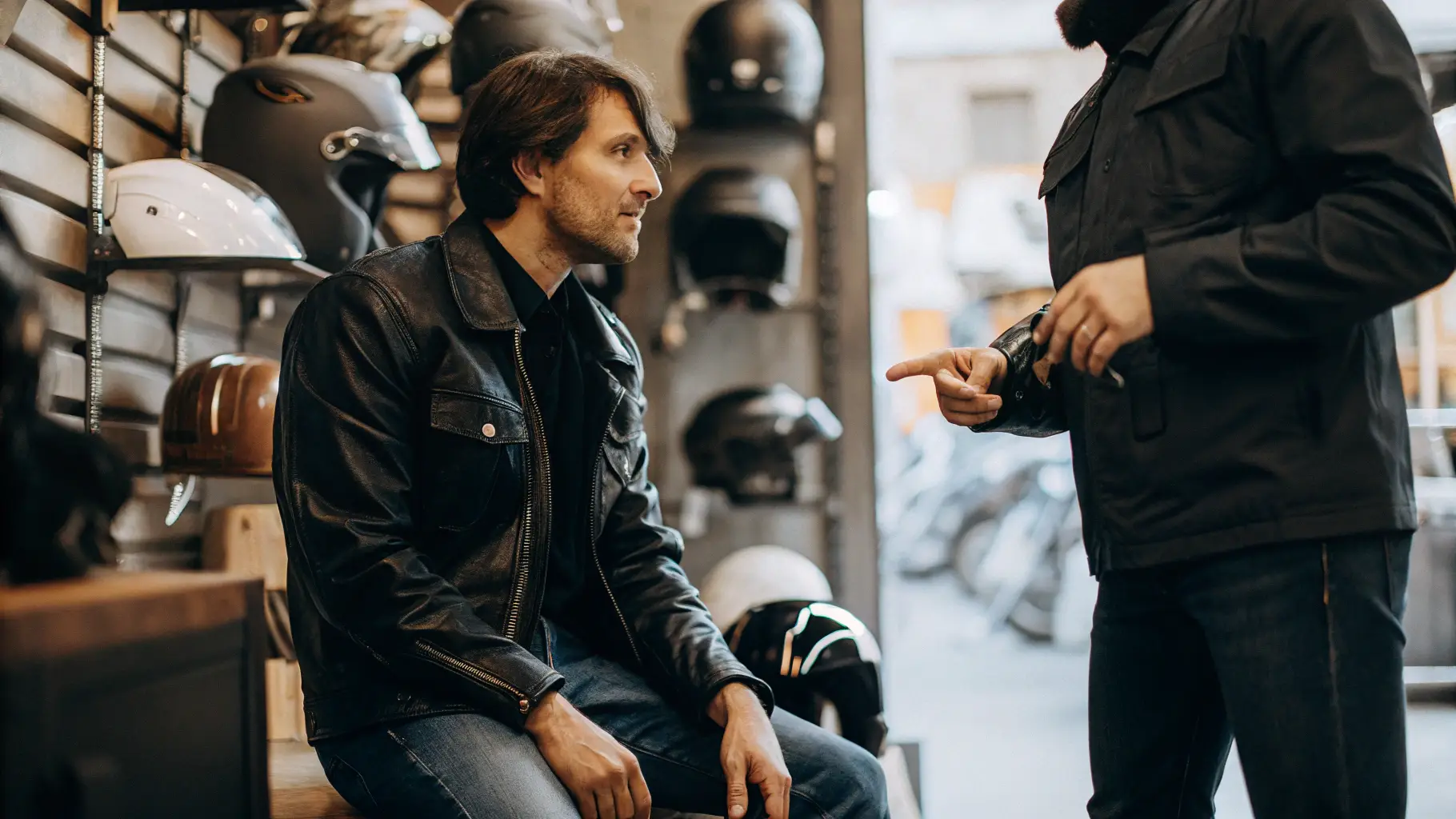
Then visit showrooms and dealers. Here you can see and feel the motorcycles in person. Ask the salespeople questions and get them to tell you about the different models.
Important factors to consider
Set your budget and look into financing options. Don't forget to factor in additional costs such as insurance, maintenance and protective clothing.
Be honest about your riding experience and skills. A motorcycle that is too powerful can be dangerous for beginners. Choose a motorcycle that suits your level.
Think about what you will use it for. Do you want to use the motorcycle mainly for commuting, or do you dream of long tours? This will influence your choice of type and model.
Taking test rides and comparing motorcycles
Take test rides on different motorcycles. Pay attention to comfort, handling and whether the motorcycle feels right for you. Compare motorcycles not just on paper, but also on feel.
Take your time over this process and don't let yourself be rushed. A well-considered choice means years of riding enjoyment. And don't forget: a good helmet is indispensable for riding safely, whichever motorcycle you choose.
What to look out for when buying a motorcycle
There are several things to look out for when buying a motorcycle. These factors can make the difference between a great ride and a disappointing experience. Let's look at the key points.
Technical aspects
Engine performance and power
Choose a motorcycle that suits your riding experience and style. For beginners, a motorcycle with less power is often safer, while experienced riders may be looking for more power. Also look at the torque, which determines how quickly the motorcycle accelerates.
Brakes and safety features
Good brakes are crucial for your safety. Look out for motorcycles with ABS (anti-lock braking system) and, if possible, traction control. These systems can help you in tricky situations on the road.
Comfort and ergonomics
A comfortable seating position is essential, especially for longer rides. Pay attention to the seat height, the position of the footrests and the handlebars. Try out different motorcycles to feel what suits you best.
Practical considerations
Maintenance and repair costs
Ask about service intervals and average repair costs. Some motorcycles are more expensive to maintain than others. In the long run this can make a considerable difference to your total spending.
Insurance and road tax
Don't forget to include the costs of insurance and road tax in your considerations. These can vary depending on the type and engine capacity of the motorcycle.
Accessories and equipment
Think about which accessories you need, such as panniers for luggage or a windscreen for longer rides. Don't forget to invest in good protective clothing and a high-quality helmet too. A reliable helmet is indispensable for your safety, regardless of the type of motorcycle you choose.
By taking all these factors into account, you can make a well-considered choice that suits your needs, riding style and budget. Take the time to compare different options and ask experienced riders or professionals in the motorcycle trade for advice.
The role of the dealer
When buying a motorcycle, the dealer plays a crucial role. A good dealer is not just a point of sale, but a valuable partner in your motorcycling adventure. Let's look at why choosing an authorised dealer is so important and which services you can expect.
Why choose an authorised dealer?
Authorised dealers have direct links with the manufacturer. This means they have the most up-to-date knowledge and training, specifically for the brands they sell. They have access to genuine parts and the latest models, which is crucial for both new and used motorcycles.
Services a good dealer offers
Expert advice and guidance
An experienced dealer can help you choose the right motorcycle for your riding style, experience and budget. They can tell you about the latest technologies and safety features, so you can make a well-informed decision.
After-sales service and maintenance
Good dealers offer excellent after-sales service, including regular maintenance and repairs. They often employ specialist mechanics who keep your motorcycle in top condition.
Warranty and customer service
Authorised dealers can offer manufacturer warranties and often have additional warranty packages. You can also count on professional customer service if you have questions or problems.
The importance of a reliable relationship with your dealer
A good relationship with your dealer can bring many benefits in the long run. They can keep you up to date on new models, accessories and upgrades that suit your preferences. A trusted dealer can also help you maintain and upgrade your protective gear, such as your helmet, which is essential for your safety on the road.
By choosing a reputable dealer, you ensure expertise, reliability and support throughout your motorcycling career. It is an investment that pays off in riding enjoyment and peace of mind.
Financing and insurance
Financing your new motorcycle and arranging good insurance are crucial steps in the purchasing process. Let's look at the different options you have.
Financing options for your new motorcycle
When buying a motorcycle you have several financing options:
- Personal loan: A flexible option where you borrow a fixed amount and repay it in instalments.
- Motorcycle leasing: Here you ‘rent’ the motorcycle for a longer period, often with the option to take it over at the end of the contract.
- Dealer financing: Many dealers offer their own finance plans, sometimes with attractive terms.
Each method has its pros and cons. A personal loan gives you immediate ownership, but may have higher monthly payments. Leasing often offers lower monthly costs, but you don't own the motorcycle straight away.
The importance of good motorcycle insurance
Proper motorcycle insurance is indispensable for every rider. There are different types of insurance:
- Third-party liability insurance: Covers damage you cause to others (required by law).
- Third-party liability plus limited comprehensive: Also covers certain damage to your own motorcycle, such as theft or fire.
- Fully comprehensive insurance: Offers the most extensive cover, including damage to your own motorcycle.
When choosing insurance, take into account the factors that influence the premium:
- Your riding experience and age
- The type and value of your motorcycle
- Where you live and where you keep the motorcycle
Don't forget that a good helmet and protective clothing are essential for your safety. Invest in quality and comfort, because this can significantly improve your riding experience and safety.
Safety and riding skills
Riding a motorcycle is a fantastic experience, but safety must always come first. Wearing the right protective gear is essential for every rider, regardless of your experience.
The importance of safety when riding
Motorcyclists are more vulnerable in traffic than car drivers. That is why it is crucial to protect yourself properly. A good helmet is the most important part of your safety equipment. Choose a helmet that meets the ECE standard and fits your head shape well.
Safety equipment and protective clothing
Besides a helmet, it is important to invest in:
- Motorcycle jacket and trousers with armour
- Motorcycle gloves
- Motorcycle boots
- Back protector
These items protect you in a fall and offer comfort while riding.
The right motorcycle helmet: indispensable for safety and comfort
An important part of riding is choosing the right helmet. A helmet is not only compulsory, but also essential for your safety on the road. A good motorcycle helmet protects your head in a fall or collision and can save lives. That is why it is important to invest in a helmet that fits well and meets the latest safety standards, such as ECE 22.06.
Besides safety, a helmet also offers comfort while riding. Whether you choose an open-face, modular or full-face helmet, make sure it suits your riding style and personal preferences. Look at features such as ventilation, weight and extras such as an anti-fog visor.
Would you like more information about helmets? Then read our blog about helmets. Want to see the collection straight away? Click here. A helmet is more than an accessory: it is your most important protection on the bike!
Riding skills courses and training
Even experienced riders can benefit from extra training. Consider taking a riding skills course to improve your skills and stay up to date with the latest safety techniques.
Tips for riding safely
- Always stay alert and anticipate the behaviour of other road users
- Keep a sufficient distance
- Adapt your speed to the conditions
- Make sure you are clearly visible to others
By taking safety seriously, you can enjoy the freedom that motorcycling offers with peace of mind.
Maintenance and care
A well-maintained motorcycle is not only safer, but also lasts longer and holds its value. Let's look at the main aspects of motorcycle maintenance.
Basic maintenance for your motorcycle
Regular checks and services
Follow the manufacturer's service schedule closely. This usually includes:
- Changing the oil
- Replacing filters
- Checking the tyres and inflating them to the right pressure
- Checking the brakes and replacing them if necessary
- Lubricating and adjusting the chain
Daily and weekly maintenance
Do a quick check before every ride:
- Tyre pressure and condition
- Braking performance
- Lighting
- Oil level
Each week you can lubricate the chain and inspect the general condition of your motorcycle.
Winter storage and seasonal care
If you store your motorcycle over the winter, take the following steps:
- Fill the tank to prevent rust
- Maintain or remove the battery
- Put the motorcycle on a stand to take the weight off the tyres
- Use a breathable cover
The importance of genuine parts and professional maintenance
Invest in genuine parts for optimal performance and safety. Have major services carried out by an authorised dealer or specialist. They have the right knowledge and tools to keep your motorcycle in top condition.
Don't forget that good maintenance also applies to your safety equipment. Check your helmet regularly for damage and replace it if necessary. After all, a quality helmet is indispensable for riding safely.
Conclusion
Buying a motorcycle is an exciting undertaking that requires careful consideration. Whether you choose a brand-new machine or a reliable second-hand motorcycle, there are a few important points to keep in mind:
- Set your budget and factor in additional costs such as insurance and maintenance
- Choose a type of motorcycle that suits your riding experience and intended use
- Invest in quality safety equipment, especially a good helmet
- Consider the pros and cons of new versus used motorcycles
- Buy from a reliable dealer for expert advice and after-sales service
- Make sure you have regular maintenance carried out to keep your motorcycle in top condition
- Keep improving your riding skills with further training
By bearing these points in mind, you increase the chance of years of safe and enjoyable riding.
Frequently asked questions
Which is better: a new or a used motorcycle?
It depends on your budget and preferences. New motorcycles offer the latest technology and a warranty, while used motorcycles often give you more for your money.
How do I choose the right motorcycle helmet?
Choose a helmet that suits your head shape, meets the ECE standard and feels comfortable. Try on different models and brands to find the best fit.
How often should I have my motorcycle serviced?
Follow the manufacturer's service schedule, usually every 5,000 to 10,000 kilometres or once a year, whichever comes first.
Is it compulsory to take out motorcycle insurance?
Yes, in the Netherlands, third-party liability insurance (WA) is the legal minimum for all motorcyclists.
What protective clothing do I need besides a helmet?
Invest in a motorcycle jacket, trousers, gloves and boots with armour for optimum safety.
Can I ride any motorcycle straight away with my motorcycle licence?
No, there are different categories of motorcycle licence (A1, A2, A) that determine which type and power of motorcycle you are allowed to ride.
How do I prepare my motorcycle for winter storage?
Fill the tank, maintain the battery, put the motorcycle on a stand and use a breathable cover for the best protection during the winter months.
Was this article helpful?