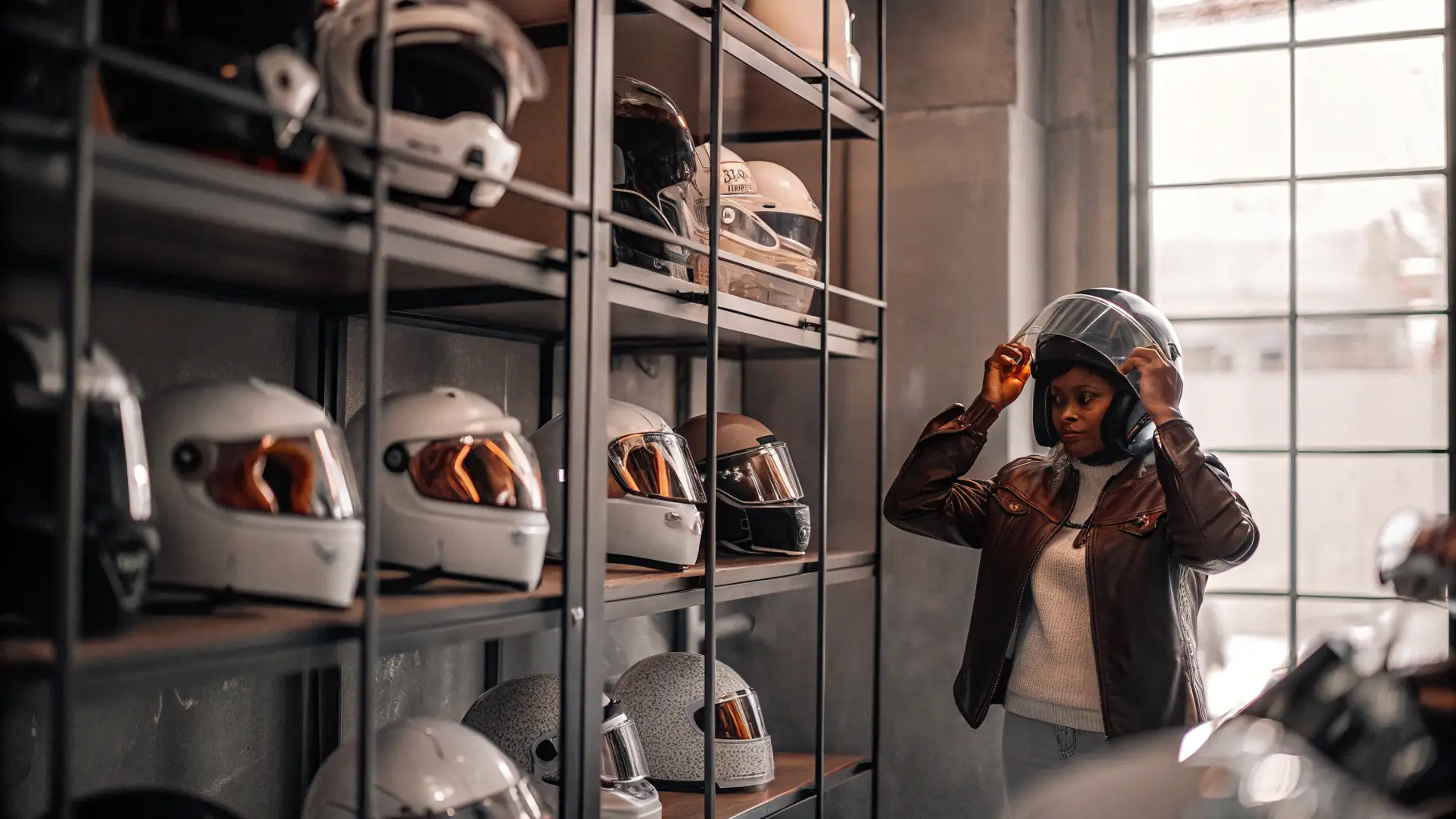
The best motorcycle helmets for city riding and commuting
What to look for in a city helmet: certification, weight, ventilation, visibility, modular or full-face, and when to replace your helmet.
In this article11 sections
For city riding and commuting, a modular helmet is often the best choice: you flip up the chin bar at a traffic light and get the protection of a full-face helmet on the road. Also look for ECE 22.05 or ECE 22.06 certification, a low weight, adjustable ventilation, a wide field of view and reflective elements or bright colours.
Introduction
Features of city helmets
Helmets for urban use stand out for their versatility. They offer a perfect balance between protection, visibility and ease of use. Think of:
- Lightweight construction for long-lasting comfort
- Improved ventilation to keep your head cool in heavy traffic
- Good sound insulation against city noise
- Wide field of view for the best possible view of other road users
Why a helmet specific to everyday use matters
A helmet that suits your daily rides can make a world of difference. It not only increases your safety, but also your riding enjoyment. The right helmet can also protect you from the elements.
Key factors when choosing
When choosing a helmet for urban use, look at:
- Safety certifications (ECE 22.05 or newer)
- Fit and comfort
- Visibility (reflective elements)
- Versatility (suitable for different weather conditions)
- Ease of use (simple to put on and take off)
By taking these factors into account, you will find a helmet that suits your daily urban rides and commute perfectly.
Safety as the top priority
When it comes to riding in the city, safety comes first. Let's look at the crucial features your helmet needs for the best protection on your daily rides.
Safety standards and certifications
Every motorcycle helmet you consider must meet the European ECE 22.05 standard or the newer ECE 22.06 standard. These certifications guarantee that the helmet has passed rigorous tests for shock absorption, penetration resistance and stability. Never choose a helmet without this approval.
Safety features that matter in city traffic
For city riding, certain safety features are especially important:
- Improved field of view: A wider field of view helps you quickly spot movement in your peripheral vision, which is crucial in busy city traffic.
- Lightweight construction: A lighter helmet reduces neck fatigue on long rides or with lots of stopping and starting.
- Quick-release fastening: A fastening that is easy to operate means you can take the helmet off and put it on quickly during short stops.
The importance of visibility
In the bustle of the city, it is essential that other road users can see you clearly. Look for helmets with:
- Reflective elements or strips
- Bright, eye-catching colours
- An integrated visor with an anti-fog coating as an option
By choosing a helmet that meets these criteria, you not only increase your own safety, but also help make traffic safer for everyone.
Read more: Full-face helmet vs. modular helmet: choose the perfect helmet for your riding style
Comfort for everyday use
When it comes to riding in the city every day, comfort is an essential factor. A helmet that feels good on your commute can make the difference between a stressful ride and a relaxed one. Let's look at the most important aspects of everyday comfort.
Lightweight materials
For long-lasting comfort, lightweight helmets are a godsend. Modern helmets use advanced materials such as polycarbonate, fibreglass and carbon. These materials not only offer excellent protection, but also bring a considerable weight reduction. A lighter helmet puts less strain on your neck and shoulders, especially on longer rides or in a lot of stop-start city traffic.
Ventilation features
Good ventilation is crucial for comfort in different weather conditions. Look for helmets with adjustable vents that you can adapt to the weather and your personal preference. Some helmets even offer advanced ventilation systems that optimise airflow without compromising safety. This helps keep your head cool on hot summer days and prevents excessive sweating.
Noise reduction
A quiet ride in the city starts with effective noise reduction. Choose helmets with good acoustic insulation to dampen city noise. This reduces fatigue and stress on your daily rides. Look for helmets with an aerodynamic design and well-sealing ear pads, which contribute to a quieter and more relaxed ride.
By choosing a helmet that combines these comfort features, you make sure your daily rides through the city are not only safe, but also enjoyable.
Versatility and functionality
When it comes to riding in the city, the versatility and functionality of your helmet are essential. Let's look at the most important aspects that make your helmet suitable for everyday use in city traffic.
Modular helmets vs. full-face helmets
For city riding, modular helmets often offer the best balance between protection and ease of use. They combine the safety of a full-face helmet with the comfort of an open-face helmet. With a flip-up chin bar, you can easily talk to someone at traffic lights or take a quick drink without taking the whole helmet off. Full-face helmets, on the other hand, offer maximum protection and are ideal for longer rides or higher speeds.
Practical features for everyday use
Modern helmets come with handy extras that make everyday use easier:
- Built-in sun visors: Indispensable for changing light conditions on your commute.
- Anti-fog visors: Provide a clear view, even in cold or damp weather.
- Quick-release fastenings: Make putting on and taking off your helmet a piece of cake.
Communication on the road
For many commuters, compatibility with communication systems is a must. Look for helmets with pre-installed recesses for speakers and microphones. This makes it possible to make hands-free calls, listen to navigation instructions or even stream music during your ride, without compromising on safety.
By choosing a helmet that combines these functions, you make your daily city rides not only safer, but also a lot more comfortable and practical.
Style and design for the urban rider
As a city rider, you want to look good as well as stay safe. The right helmet can complete your look and increase your visibility at the same time. Let's look at the latest trends in helmet design for the urban rider.
Trendy designs for the city
Modern city helmets combine functionality with a sleek look. Minimalist designs with clean lines and subtle details are very popular at the moment. Think of matt finishes and geometric patterns that suit the urban landscape perfectly. Some brands even offer customisation options, so you can personalise your helmet with unique graphics or colour accents.
Colour choices for visibility and style
Safety remains the priority, but that doesn't mean you have to compromise on style. Bright colours such as neon yellow, orange or lime green are not only trendy, but also increase your visibility in busy city traffic. If you prefer something more understated, there are helmets in classic shades with reflective details. These offer a perfect balance between a stylish look during the day and increased visibility at dusk.
Balancing function and aesthetics
The trick is to find a helmet that not only looks good, but is also practical for everyday use. Look for models with integrated features such as built-in sun visors or provision for communication systems. These elements not only add functionality, but also contribute to a streamlined, modern look.
By choosing a helmet that combines style, safety and functionality, you turn every city ride into a statement.
Maintenance and durability
A well-maintained helmet lasts longer and offers the best protection. Here are a few tips to keep your helmet in top condition:
Tips for cleaning and maintaining your helmet
- Clean the outside regularly with a helmet cleaner
- Use special visor cleaning products to prevent scratches
- Always let your helmet dry naturally and avoid direct heat sources such as a hairdryer
Lifespan of helmets for everyday use
The average lifespan of a quality helmet is around 5 years with normal use. Factors that affect its lifespan are:
- How often you use it
- Exposure to UV radiation
- Quality of maintenance
- Storage conditions
When is it time to replace your helmet?
Replace your helmet immediately after an accident, even if there is no visible damage. Other signs that it is time for a new helmet:
- Visible wear or damage to the outer shell
- Loose or worn liner
- Faded colours or brittle plastic parts
- The helmet no longer fits comfortably
By looking after your helmet properly, you not only protect your safety but also get more life out of your investment. Choose quality and maintain it well, and your helmet will serve you faithfully for years on your daily city rides.
Budget considerations
When choosing a motorcycle helmet for everyday use in the city, it is important to look not only at safety, but also at your budget. Let's take a look at the different price ranges and what you can expect.
Price ranges for city motorcycle helmets
- Entry-level models (€100-€200): These helmets offer basic protection and meet the safety standards. They often lack extra features, but are fine for new riders or anyone who doesn't ride every day.
- Mid-range (€200-€400): Here you will find helmets with a better fit, improved ventilation and often extras such as built-in sun visors.
- Premium segment (€400+): These helmets offer top-quality materials, advanced safety features and maximum comfort for everyday use.
The relationship between price and quality
Although a higher price often means better quality, this is not always the case. Look at factors such as fit, weight and the specific features that matter to you. Sometimes you can find an excellent helmet in the mid-range that meets your requirements perfectly.
Long-term investment vs. short-term savings
Investing in a good-quality helmet can work out cheaper in the long run. A durable helmet lasts longer, offers more comfort and can even help you feel less tired on your daily rides. Consider your budget carefully, but remember that your safety and comfort are at stake.
Remember: the best helmet is one that fits your budget and meets your specific needs for city riding and commuting.
Legal requirements and recommendations
As a rider in the Netherlands, it is essential to know the legal requirements and recommendations for wearing a helmet. Let's look at the key points you need to know.
Dutch legislation on motorcycle helmets
In the Netherlands, wearing a motorcycle helmet is compulsory for both the rider and the passenger. The helmet must meet the European ECE standard, currently ECE 22.05 or the newer ECE 22.06. This standard guarantees that the helmet meets strict safety requirements.
European standards and what they mean for the consumer
The ECE standard tests helmets on several aspects, including:
- Shock absorption
- Penetration resistance
- Stability
- Visor quality
As a consumer, you can trust that a helmet with the ECE mark has been thoroughly tested and is suitable for use on public roads.
Extra safety recommendations for commuting
For everyday use in the city, the following extra measures are recommended:
- Choose a helmet with reflective elements for better visibility
- Consider a modular helmet for extra flexibility in city traffic
- Check your helmet regularly and replace it, ideally every 5 years
By following these guidelines, you not only make sure you comply with the law, but also that you are optimally protected on your daily rides.
Conclusion
Choosing the right motorcycle helmet for your daily city rides and commute is an important decision. Let's run through the key points once more:
- Safety comes first: Always choose a helmet with ECE 22.05 or 22.06 certification.
- Comfort is crucial: Look for lightweight helmets with good ventilation for everyday use.
- Versatility pays off: Consider a modular helmet for flexibility in different situations.
- Visibility increases safety: Go for eye-catching colours or reflective elements.
- Maintenance extends lifespan: Clean your helmet regularly and replace it after 5 years or after a fall.
- Balance budget and quality: Invest in a helmet that suits your needs and riding style.
- Mind the legal requirements: Make sure your helmet complies with Dutch legislation.
By taking these factors into account, you can make an informed choice of helmet that not only keeps you safe, but also contributes to a comfortable and enjoyable ride in the city.
Frequently asked questions
How often should I clean my motorcycle helmet?
Clean the outside at least once a month and the inside every 3-4 months, or more often if you ride a lot.
Can I wash my helmet in the washing machine?
No, never wash your helmet in the washing machine. It can damage the protective structure.
Is it normal for my helmet to become looser over time?
A slight change in fit is normal, but if your helmet feels significantly looser, it is time to replace it.
What is the best way to store my helmet when I'm not using it?
Store your helmet in a cool, dry place out of direct sunlight, preferably in a helmet bag.
Can I stick stickers on my helmet without affecting its safety?
Small stickers usually have no effect on safety, but avoid large stickers or aggressive adhesives.
How do I know if my helmet is still safe after a fall?
After any significant impact, even without visible damage, it is wise to replace your helmet for optimal safety.
Is a more expensive helmet always better?
Not necessarily. Choose a helmet that meets the safety standards and suits your specific needs and budget.
What is the difference between ECE 22.05 and ECE 22.06?
ECE 22.06 is the latest standard with stricter tests, including rotational impact tests and a wider range of impact speeds.
How often should I replace my helmet?
On average every 5 years, or sooner if it shows visible damage or after a fall.
Are modular helmets as safe as full-face helmets?
Modern modular helmets offer comparable safety, provided they are properly closed while riding.
Can I use a tinted visor for commuting?
Yes, but make sure you have a clear visor for riding at night or in poor weather.
How important is the brand when choosing a helmet?
Quality brands often offer better materials and innovations, but pay particular attention to the fit and safety features.
How do I know if a helmet fits properly?
A well-fitting helmet feels snug but comfortable, with no pressure points, and doesn't move when you shake your head.
Are helmets with built-in communication systems safe?
Yes, provided they meet the safety standards. They can even improve safety by allowing hands-free communication.
Can I customise my helmet with stickers or paint?
Be careful with modifications, as some substances can damage the helmet structure. Only use products that are specifically approved for helmets.
Was this article helpful?